DISCLAIMER: I am not a doctor or a nutritional advisor. The following is from my own experience. Your needs might (probably will) be different if you are pregnant, breastfeeding, or have any underlying medical conditions. Consult your doctor if you have personal nutritional concerns.
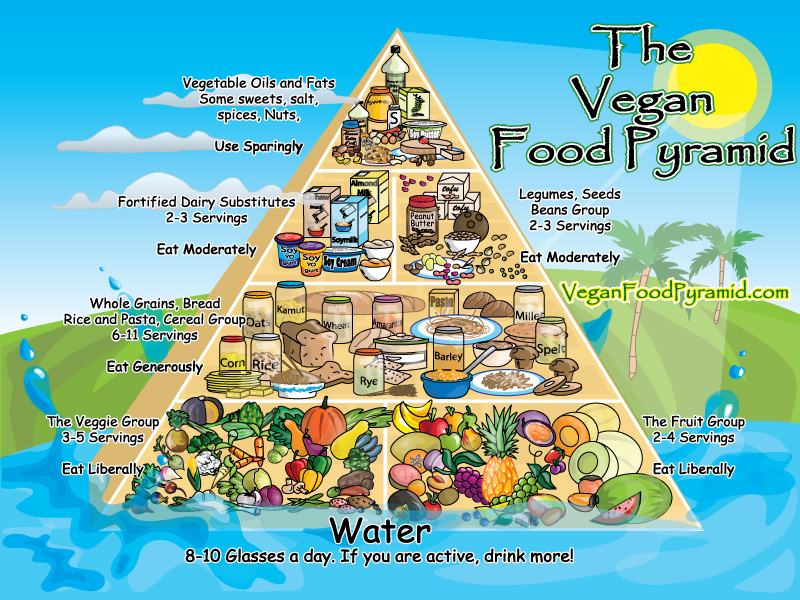 |
From: theveganproject.ca
Click image to see a larger version... |
|
|
If I had a dollar for everyone who was really
really worried about my nutrition, I could start my very own Vitamin Shoppe. Seriously. Most of the time, I take it as a compliment: "Awww... thanks for caring about me so much that you don't want me to die of anaemia or scurvy. It means a lot!" (Ok, no one is really worried about me developing scurvy, but it is a funny word and conjures images of pirates. Aye matey.)
The reality of the situation is, that vegetarians (and yes, even vegans) can easily get enough nutrition from their diets, that they should never need to enter a GNC (although, unless you are a body builder, or having a mid-life crisis, who actually goes in there anyway???).
Anyway, I've mentioned before that I've been a vegetarian for nearly 20 years, and my doctors have always been really happy with my health. But still, every time I get a little tired and run-down, I hit the doctors office for an iron test (you people with all your concerns have me really paranoid!).... but every time it comes back OK.
While it is absolutely
not necessary to take a bunch of pills and powders to supplement an animal-free diet, there are a few things that vegetarians and vegans do need to pay attention to. I list them here in terms of increasing order of importance or significance. Oddly, the things that people are always the most worried about appear first in the list - meaning they are actually no-brainers for anyone eating a sensible balanced diet.
Protein- if you eat enough calories (and they don't come from candy bars and soda) than you are getting enough protein by default. It is a basic part of living cells, be it plant or animal. Some plants deliver more protein (per calorie) than others.... these would be: soy beans, other beans and lentils, chickpeas, nuts, seeds, mushrooms, quinoa, whole grains, oatmeal, rice, broccoli and corn. Many plant sources provide more protein (per calorie) than meat.... and they also offer way more fibre, vitamins, and antioxidants than meat, and way less fat and cholesterol. And since they have fewer calories per volume than meat, you actually get to eat
more food volume. Score!
Unless the majority of your calories come from high fat or sugar containing foods (in which case you are either very very hungry all the time -
eating 2000 calories with very little nutrition and fibre, or gaining weight rapidly -
eating to fill you up, which will amount to a TON of calories), you
do not need a protein supplement.
Iron - Iron should be no problem for a healthy vegetarian or vegan. Excellent sources of iron include: spinach, beans, lentils, oatmeal, quinoa (a yummy grain), chickpeas, nuts, sunflower seeds, nutritional yeast, molasses. Make sure you eat enough foods with vitamin C to help with iron absorption. If you are worried about it, as I sometimes am, it is an easy blood test to check. However, I have NEVER had a problem... even in college when probably 50% of my diet was pizza shop take-out.
Calcium - is found in abundance in dark green leafy veggies, like kale, broccoli, and collard greens. It is also found in some seeds like sesame (tahini) and almonds. Soy milk is generally fortified with additional calcium, and tofu is sometimes fortified. Calcium is (logically) absolutely no problem for vegetarians. Vegans need to be a little vigilant to eat enough dark green leafy veggies, and buy a calcium fortified milk substitute (i.e. soy or rice milk). But again, this is pretty darn easy. I would guess that pregnant or breast feeding women need to discuss this with a doctor, and temporary supplements might be necessary (but hey, just add it to the list of other pregnancy supplements).
Omega-3 fatty acid - is an essential fatty acid, meaning it is necessary for life, but not produced by the human body. It is only found in oily fish and in a couple grains like flax and hemp. I could write a mini-thesis on omega-3, but I am trying to keep this to a paragraph or less... suffice it to say that Omega-3 FA is good for your cardiovascular system, joints (especially for anti-inflamitory effects for the joints), it helps guard against cancer, and supports the immune system and brain function. You should be eating some.
If you are a vegetarian or a vegan,
or you just don't like fish, you should be getting Omega-3 fatty acid from plant sources. Luckily, flax seed is 600% more rich in omega-3 fatty acid than fish, so you only need to eat 7-15 grams of flax seed a day - this translates to 1-2 spoonfulls of nutty, delicious, ground flax seed sprinkled on your oatmeal, salad, steamed broccoli, baked potato, or granola. Flax also comes in a pressed oil, which can be made into a healthy powerhouse salad dressing. It's nutty flavor makes a really delicious topping to baked potatoes or any kind of vegetable. Just make sure to drizzle it on after cooking, because even medium heat destroys the healthy omega-3 fatty acid.
There are other omega fatty acids, omega-6 being the next important. This, however, is found in most nuts and seeds - and the typical American diet (even vegetarian) contains too much omega-6 due to the oils used in many processed foods. It is important to maintain your ratio of omega-6 : omega-3 at about 3:1. Adding flax seed or flax oil to your diet (even you non-vegetarians!) will help you balance this ratio.... and it will make your hair shiny :)
B12- is not produced by plants OR animals. It is produced by bacteria. Animal sources (meat and dairy) contain B12 through their consumption of it. How do they consume it? well, either they have stomachs in which plant food can ferment (bacterial culturing) before the area of the GI tract where B12 vitamin is absorbed (like cows), or, if the bacteria ferments the food after the GI tract can process B12, some animals get it by re-ingesting their own feces (ew.) Or, they eat other animals who have gone through these processes.
Since humans don't have extra stomachs, and tend to shy away from eating feces, there is only one option for vegans - supplements....
.... however, B12 is already supplemented to many commercial breakfast cereals and soy milk. Most people will get enough or nearly enough B12 from these sources (you don't need much - a couple micrograms'll do it!). If you worry that you don't have enough, you can add a fortified nutritional yeast. Nutritional yeast will be discussed shortly. If you or your doctor is still concerned that you are B12 deficient, a vitamin supplement might be a good idea.
Another pregnancy warning: Folic Acid needs B12 and B6 to function properly. We all know the necessity of Folic Acid during pregnancy, so make sure your supplement also includes B12 and B6.
So, what supplements do I take?
I have just shown that a balanced vegetarian or vegan diet doesn't really need external suppliments in the form of pills and powders. That said, what supplements do I take?
B12: I do not currently take a B12 supplement, however, I can not find a B12 fortified nutritional yeast in Belgium. Nutritional yeast is a yeast that has been grown and processed for direct. consumption (i.e. not for beer or bread - those would be brewers yeast and baking yeast respectively). In the US, Red Star brand makes a nutritional yeast that has been shown to have high levels of B12. I can not find it in Belgium, and all the labels I read do not include B12 in their nutritional information. I do get B12 from my soy milk and my breakfast cereal (All Bran), but with winter approaching, I want to eat more oatmeal (no B12 fortification) and I am thinking of starting a supplement for that purpose. Off to the internet for some research for me :)
Vitamin-D:
This is not a "vegetarian" issue, but one for everyone, which is why it is not listed above. Current research suggests a daily intake of 1000 IU of vitamin D. This is a 5x increase from what was recommended last year. Even with the lower previous recommendation, most health professionals recommended that people of all diets (unless you live on the equator and spend most of your time in a bikini, or live in an Arctic culture that gets most of it's nutrition from fish) supplement their diets with vitamin D. I live in overcast Belgium, and don't eat fish 3 times a day... therefore, I supplement. I take a big dose once a month... it is fat soluble, so your body stores it for when you need it. I hate taking daily supplements, so I like this once a month plan. The dosage for one month (about 25-45000 IU per month) is not dangerous if spread out monthly.
Here is a paper that says just that.
The "not" supplements mentioned above that
I recommend to everyone from vegans to meat-eaters, and luckily they are unbelievably delicious
:
Flax seed or oil - delicious
foods that pack a powerhouse punch of omega-3. Nutty flavor gives fantastic flavor to salad dressing (oil) or a crunchy nutty texture to other things like oatmeal, soup, salads (ground seed).
Nutritional Yeast - source of B-vitamins and Iron, these little flakes have a kind of cheesy, nutty, beer-y taste. They go great sprinkled on everything savory from pasta to mashed potatoes to soup. You can dissolve them in sauces to give a cheesy, beer-battered taste. Absolutely fantastic.
Note about vitamins and other supplements: If you are going to take a vitamin supplement, make sure you get a good one, and make sure you read the ingredients. Many vitamins include crazy daily values, like 4000% RDA of something. You are paying for this, and it is obviously not necessary. If it is a water soluble vitamin you will just pee it out (literally flushing money down the toilet), if it is fat soluble, it may build up in your body and cause toxicity. Many minerals can be dangerous if taken at high concentrations. Reading labels and research is key. KNOW WHAT YOU ARE TAKING! For me personally, I stay away from vitamins sold at the local drugstore, like Centrum, or big vitamin retailers like GNC. I find that they often have odd amounts of vitamins and minerals (and are often times not vegetarian). My personal favorite supplement brand is Solgar. I find that they have excellent products and a WIDE range to choose from. They are a little pricy, but I think it is worth it. Whatever you choose, just make sure you read it, research it, and understand it. Talking about it with your doctor is also not a bad idea.
DISCLAIMER: I am not a doctor or a nutritional advisor. Your needs might (probably will) be different if you are pregnant, breastfeeding, or have any underlying medical conditions. Consult your doctor if you have personal nutritional concerns.


